

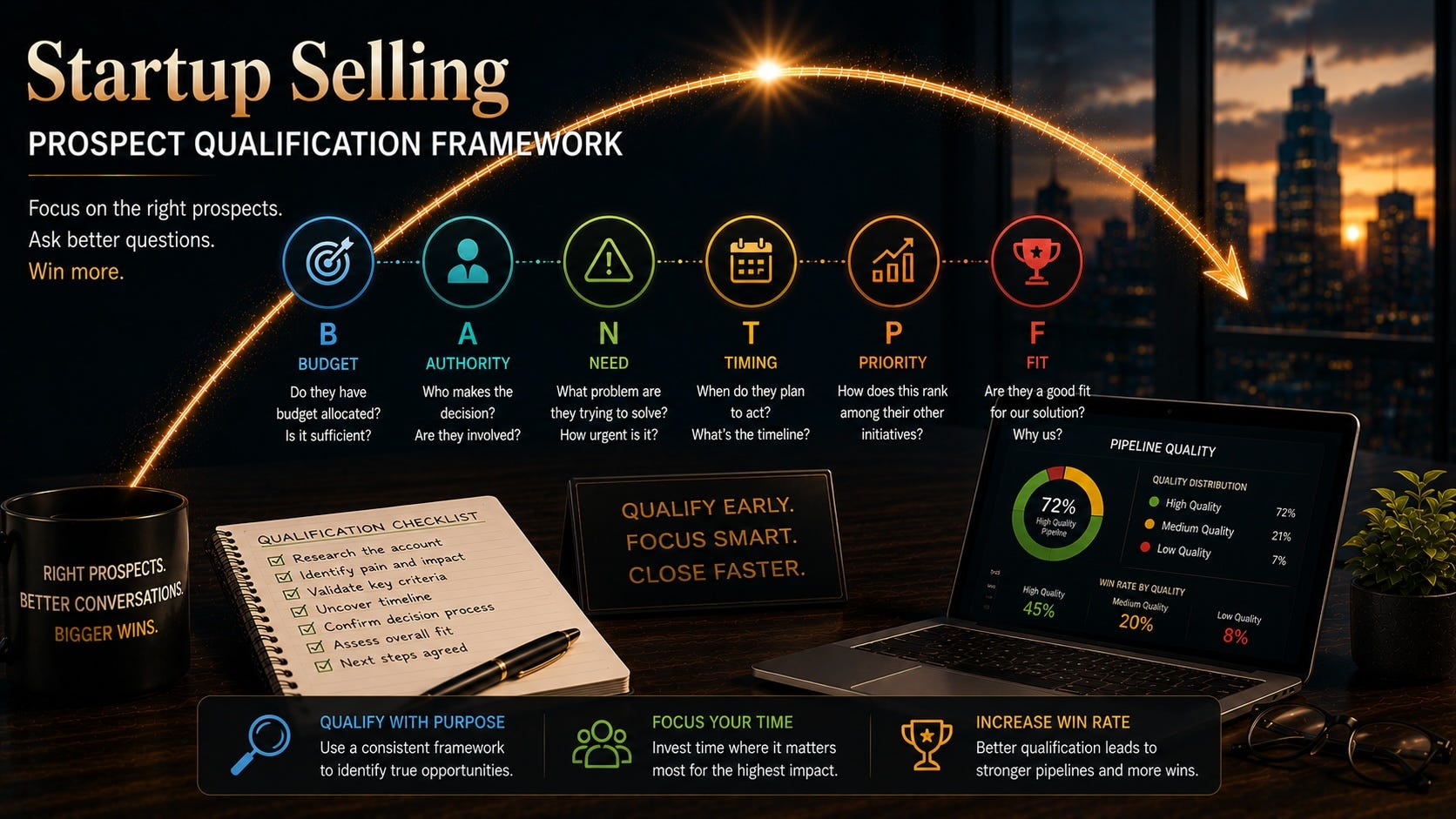
Consistent application of a startup sales qualification framework matters more than the specific framework selected, because MEDDIC, BANT, and SPICED are all operationalizations of the same underlying discipline: asking specific questions that determine whether a deal is real before investing the resources required to close it. The selection debate between frameworks distracts from the management question that actually drives commercial results, which is whether the chosen framework is applied with documented discipline at every stage of every deal in the pipeline. A team that applies BANT consistently will outforecast a team that uses MEDDIC selectively.
The forecasting consequence of inconsistent qualification is direct and measurable. Early-stage sales organizations whose pipeline reviews accept stage labels without testing them against documented qualification criteria produce quarterly forecasts that vary from actual revenue by 30 to 50 percent. That variance is not the result of unpredictable markets; it is the result of pipelines populated by deals that advanced through stages without satisfying the criteria that define each stage. The deal in late-stage negotiation with no documented economic buyer, no confirmed decision timeline, and no active champion advocacy is not a late-stage deal. Qualification discipline is what makes that distinction visible in the management data before the missed quarter.
Average account executive ramp time in B2B SaaS has extended from approximately 4.3 months in 2020 to approximately 5.7 months in 2025. Companies with consistent qualification discipline reduce effective ramp time because new representatives have a concrete operational definition of what a qualified deal looks like from the first week of employment. Instead of learning through trial and error which prospects convert, they apply the framework and receive coaching on their application of it.
The champion qualification dimension requires ongoing monitoring rather than a one-time assessment. A champion who was actively advocating in month one of the sales cycle may have been deprioritized by a new internal initiative, may have had their organizational scope reduced, or may have quietly withdrawn their advocacy following an internal conversation the representative is not aware of. The qualification question is not whether a champion was identified at the start of the deal but whether the champion continues to advocate in the forums the deal requires at each stage of the evaluation.